The organizational structure
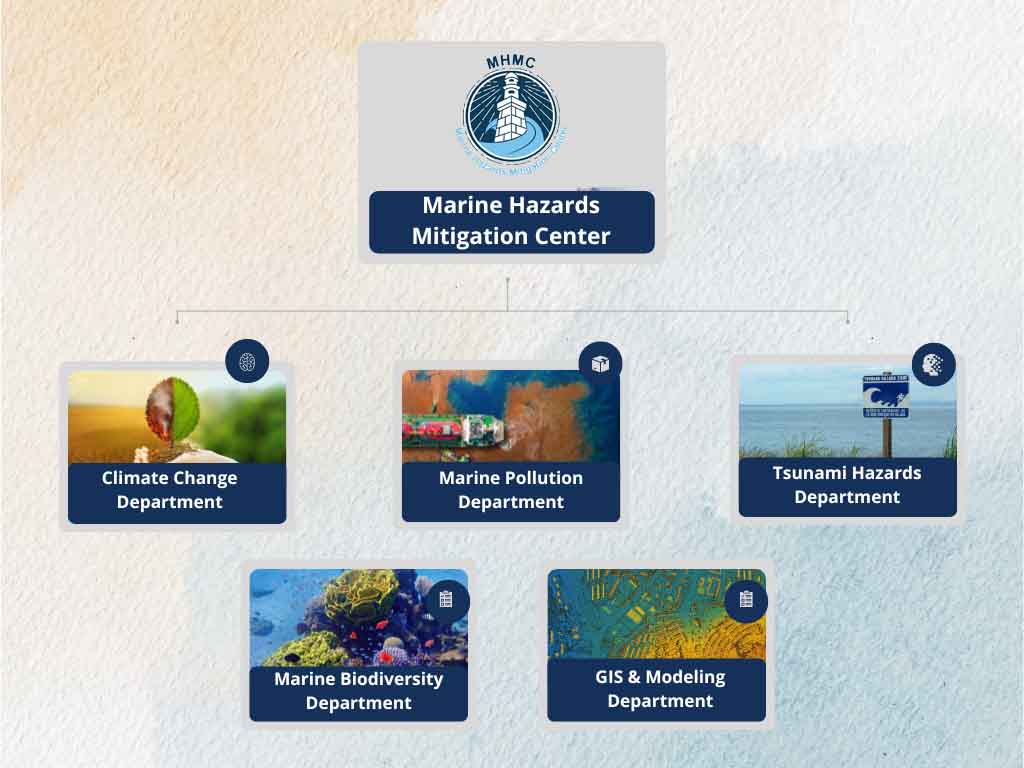
- Tsunami Hazard Department: prepare studies to increase awareness of tsunami waves and reduce their risks through studies that can identify the most affected areas. Preparation of the inundation maps and evacuation plans.
- Climate Change Department: conduct studies on the impact of climate change and the raise of temperatures on marine environment and marine habitats.
- Marine Pollution Department: It studies the impact of pollutants that marine environment is exposed, as a result of marine activities, transportation, navigation, and tourism, and works to find solutions to mitigate their effects.
- Marine Biodiversity Department: It studies the migration of marine organisms between the Red and Mediterranean Seas through the Suez Canal, in addition to the biodiversity of marine organisms in the Red and Mediterranean Seas.
- Marine Geographic Information System & Modeling Department: through the use of the latest software systems and satellite images as to create GIS maps of coastal changes; it studies satellite images of climate data and their effects on marine environment.